
Chapter 8 Preview: Wrap up
8. After finishing the previous chapters, wrap up everything you learned about the piano.
- This concluding chapter organizes all the subtopics from the different chapters into groups so that you can review, go back, and even learn more.
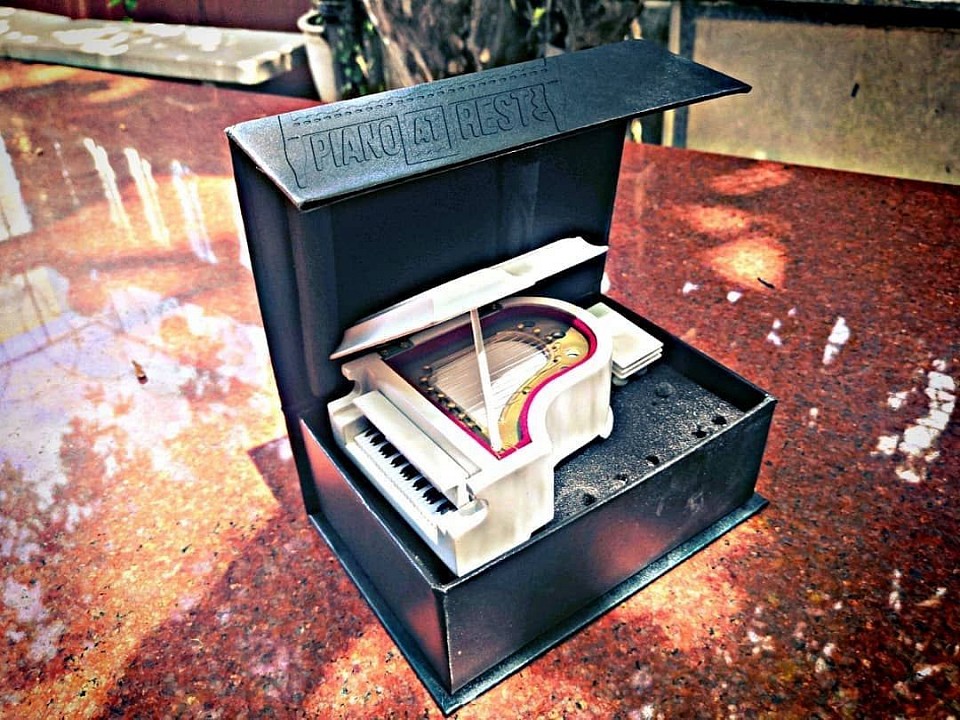
Picture 8.0
Starting Naturally
8.1. Finding Middle C
- Before playing the piano, locate the middlemost 2 black keys and find Middle C.
- Note C is the white key immediately before the 2 black keys.
- This ensures you play in the correct octaves.
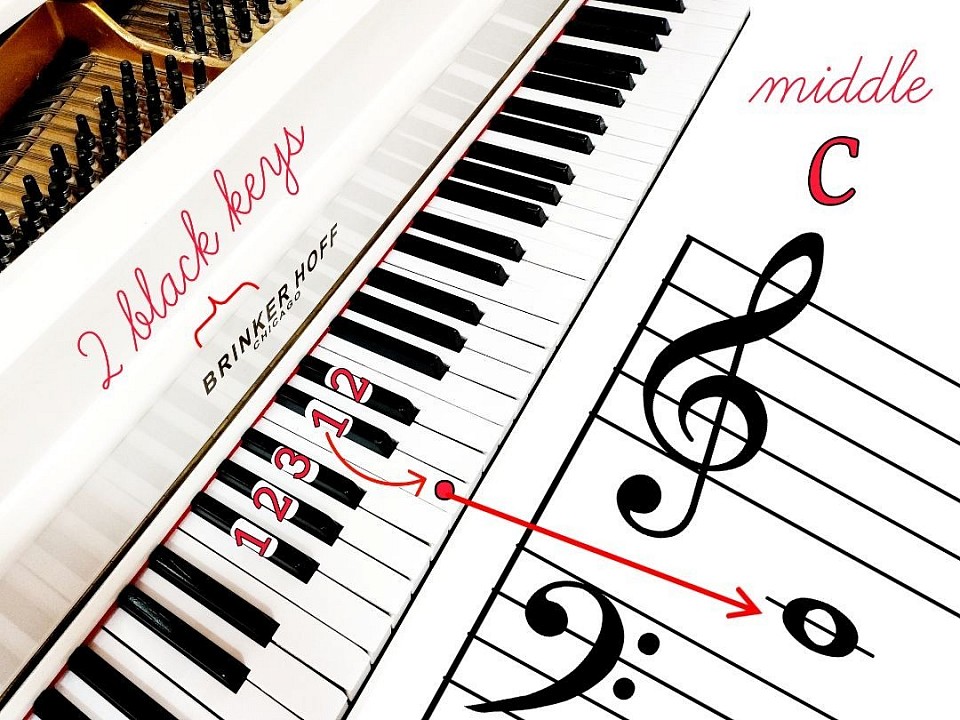
Picture 8.1
8.1.1. Middle C divides the two clefs:
- Higher notes go to the G-clef.
- Lower notes go to the F-clef.
- Seen in Petzold’s Minuet in G.
8.1.2. Compare Middle C with the note placements in Minuet in G.
- Staves can overlap.
- Ledger lines are used when notes extend beyond a staff.
8.1.3. Review notes by pitch starting from C.
- Octaves higher or lower alternate between lines and spaces.
- The same rule applies to each next letter.
- Works for both clefs.
8.1.4. On the piano keys, check the patterns of white and black keys starting from Middle C.
- Unlike the sheet, the piano keys shows the same patterns for every octave.
8.1.5. To know intervals (eg., octave – 8th):
- Count the first note as 1st.
- Next line/space as 2nd, and so on.
- Intervals are measured note to note.
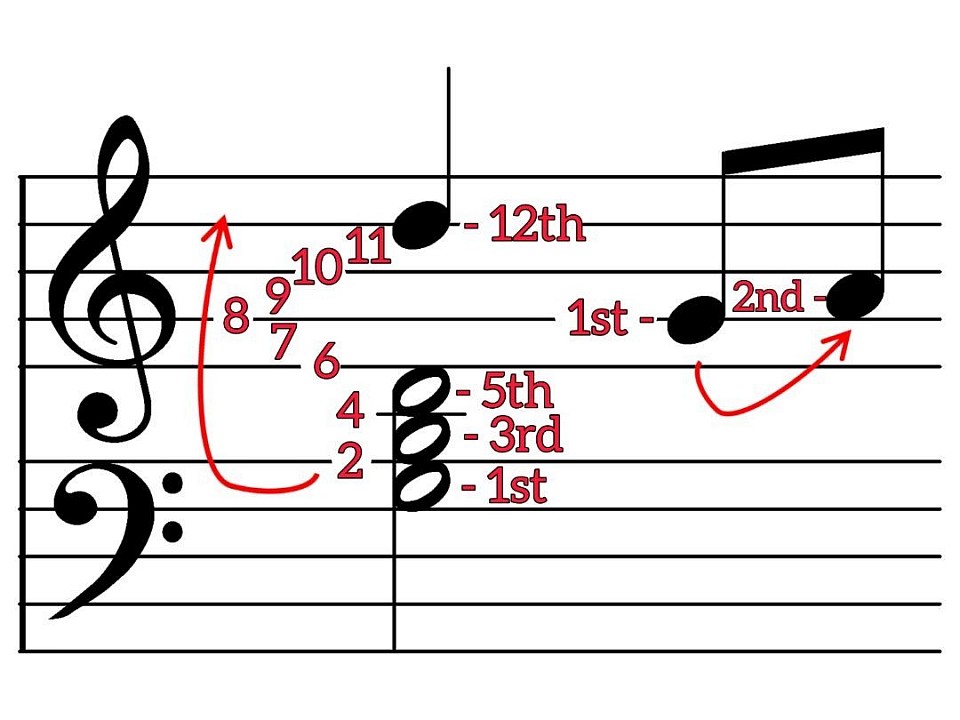
Picture 8.1.5
8.1.6. Instead of many ledger lines, use Ottava (8va/8vb) signs:
- 8va, alta, sopra (written above the notes) – play one octave higher.
- 8vb, bassa, sotta – (written below the notes) play one octave lower.
— End of Chapter 8 Preview —
Review and connect key piano topics for easier recall and deeper learning.
Continue with the free sample or unlock the complete guide below.
