Chapter 2 Preview: Start Naturally
2. "Starting Naturally" will focus on what you need to learn first.
- In this chapter, "natural" refers to the white keys on the piano.
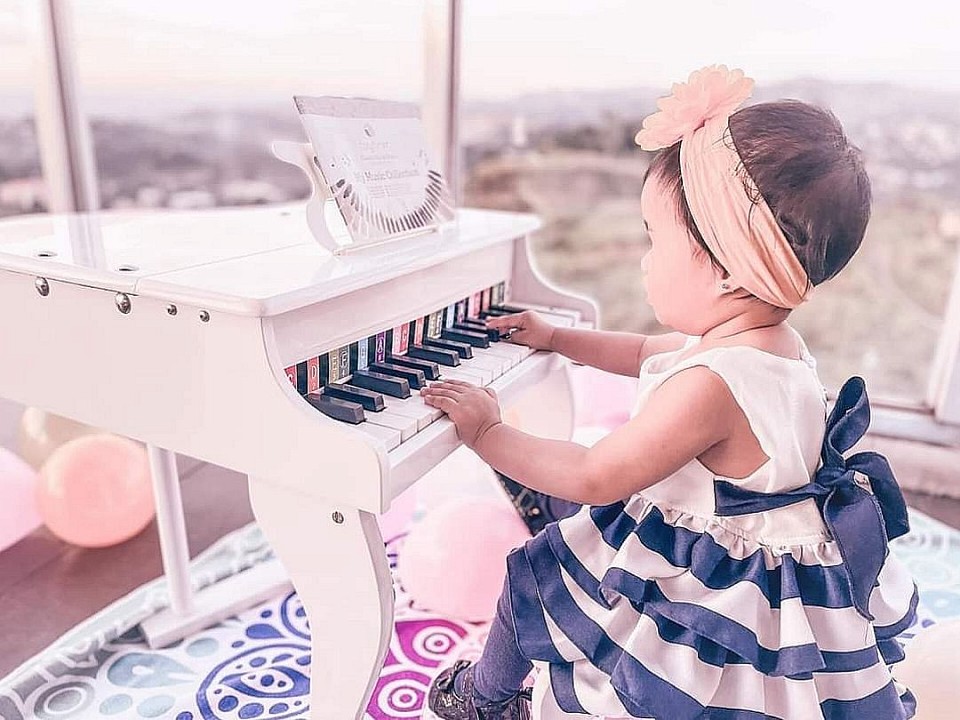
Picture 2.0
Title, Staff, & Lines
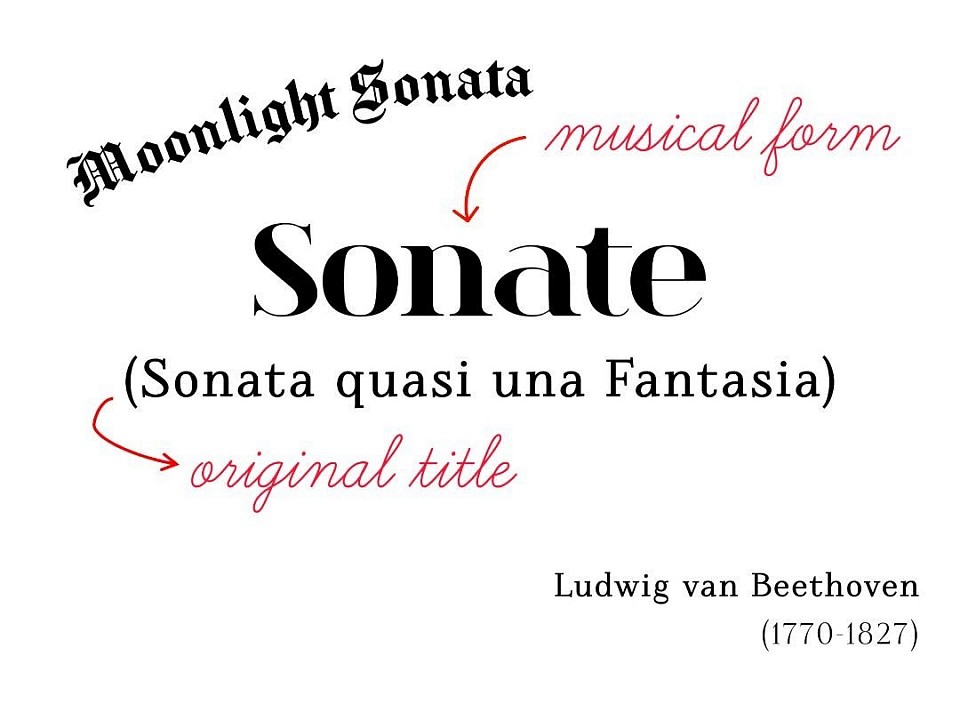
2.1. The first thing you see on a piano score is the title and composer.
- The popular title can be different from the original.
- It may start with the musical form, like in Beethoven's Moonlight Sonata.
Picture 2.1
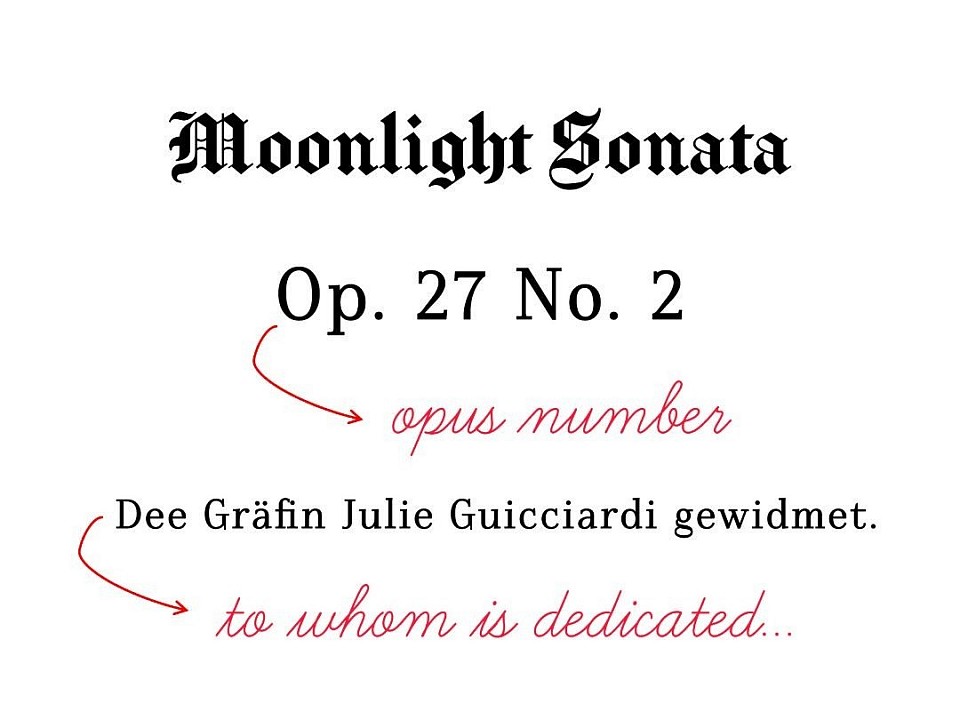
2.1.1. The Opus number (Op.) shows the order a piece was published.
- Another number may tell which piece it is.
- Sometimes, a dedication is also added.
- For Bach, the code BWV is used instead of Opus.
Picture 2.1.1
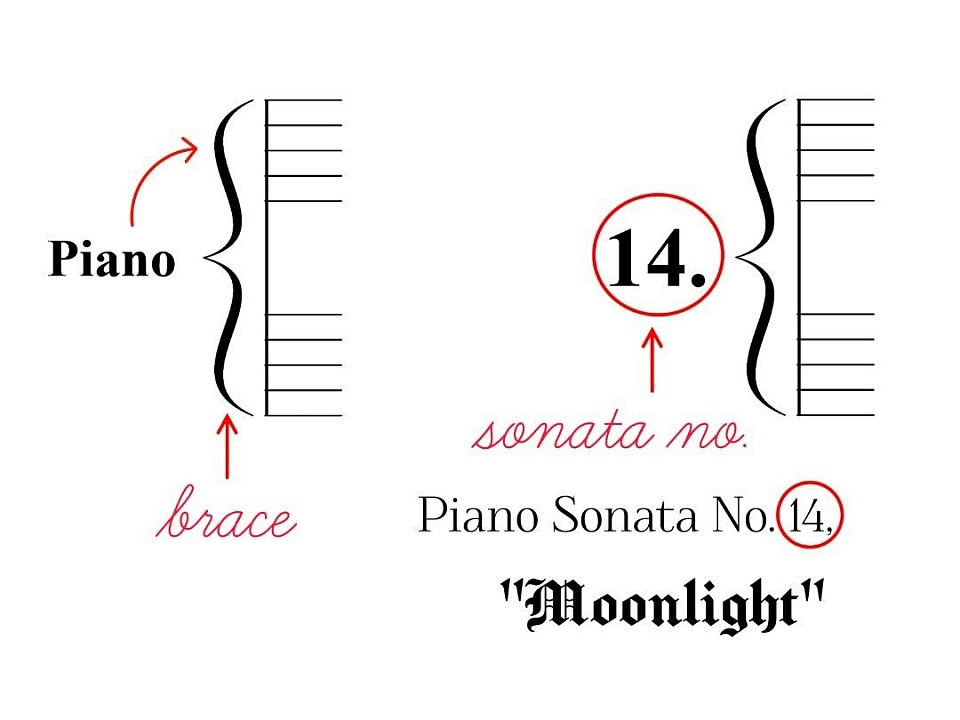
2.1.2. At the top-left of a piano score, you might see "piano" or just a brace (a curved bracket).
- In Beethoven's sonatas, a sonata number is often shown before the brace instead.
Picture 2.1.2
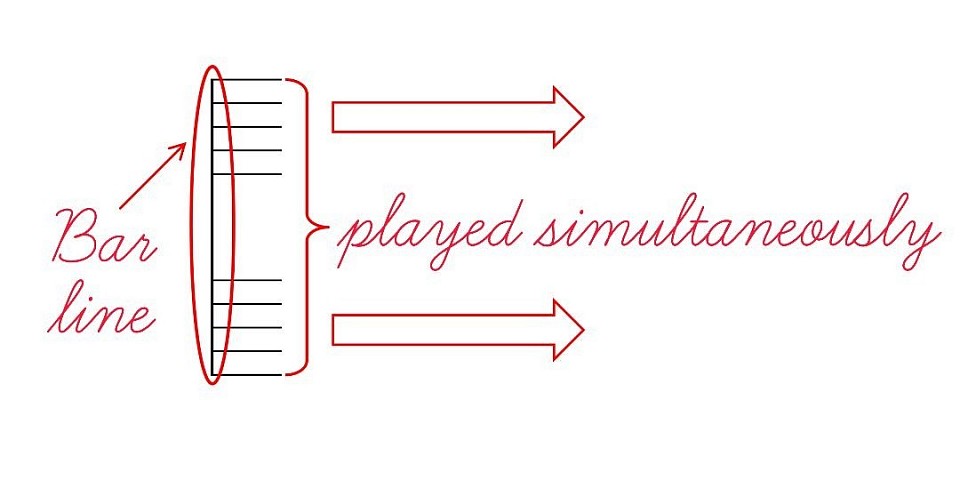
2.1.3. The brace shows that the top and bottom lines are played together, from left to right.
- Even without it, a bar line can still show that both lines go at the same time.
Picture 2.1.3
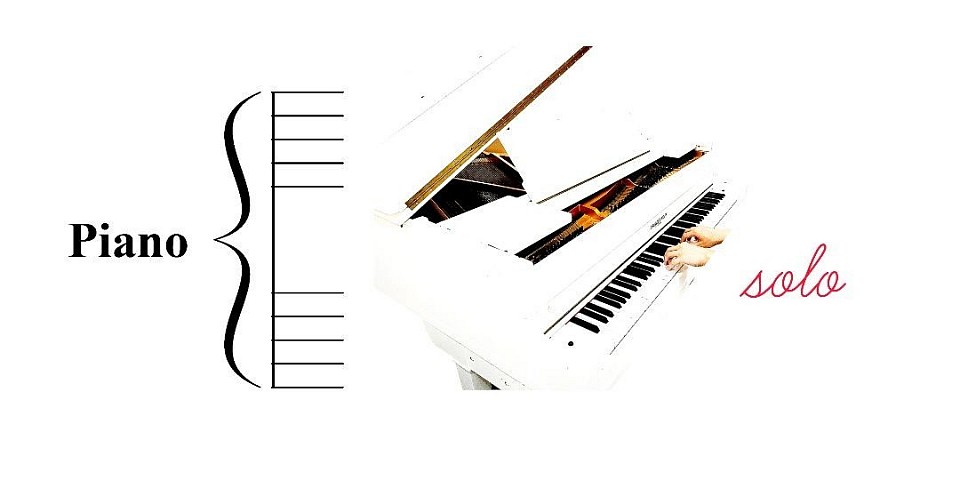
2.1.4. Most piano scores are piano solos:
- Played by one person on one piano.
Picture 2.1.4
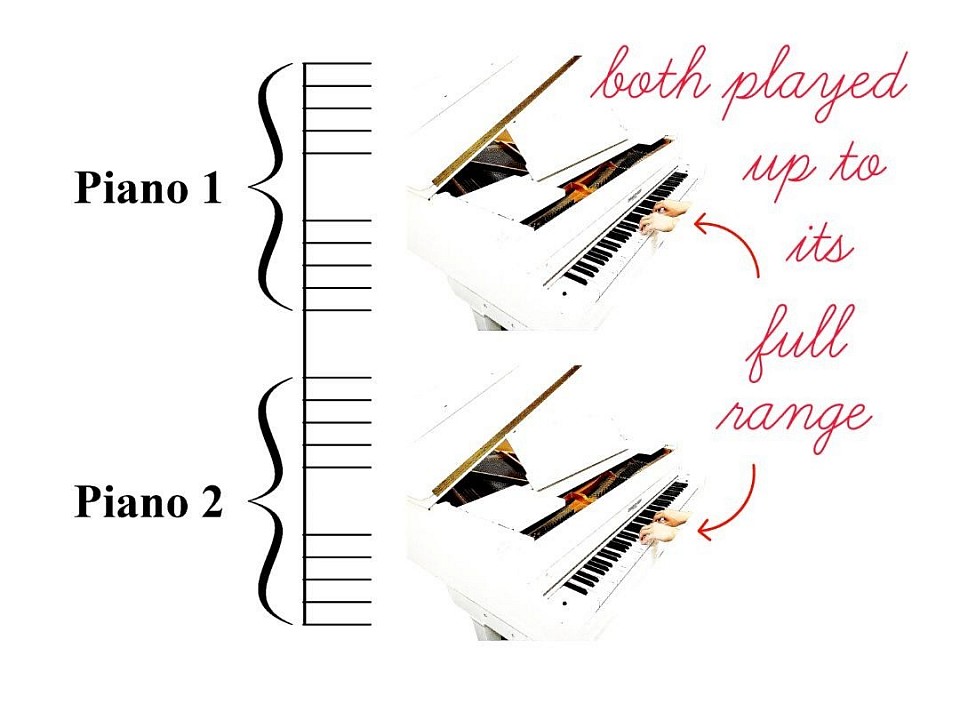
2.1.5. Some piano scores are for two players on two pianos (piano duo).
- Marked as Piano 1 and Piano 2.
- Two pianos are used so the hands do not overlap.
Picture 2.1.5
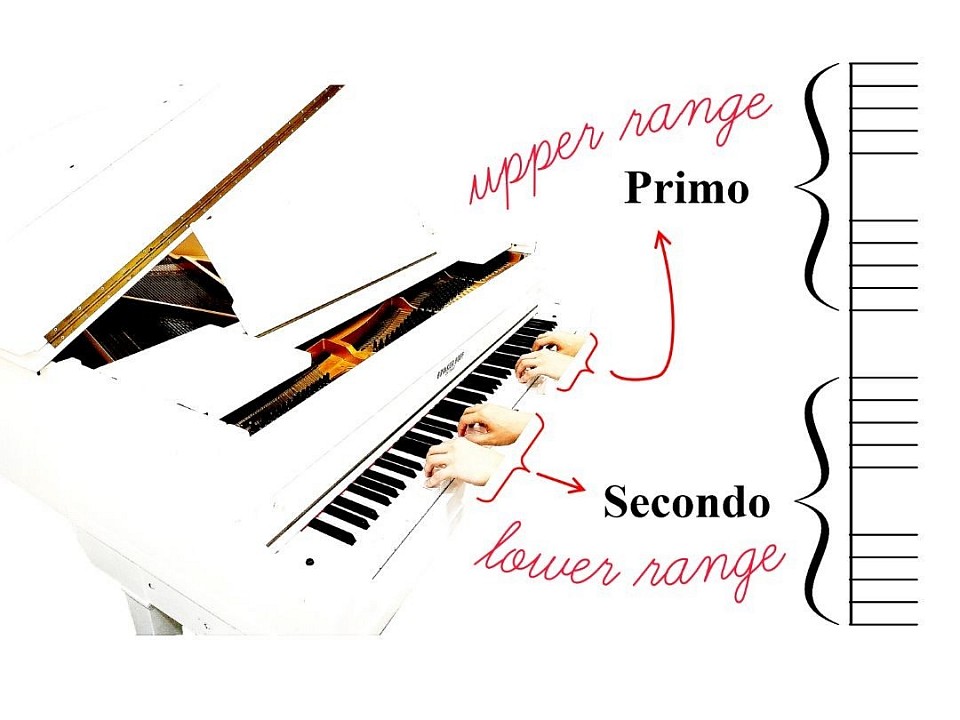
2.1.6. Piano duets can also be played by two players on one piano (piano four hands).
- Primo (right)
- Secondo (left)
- This works if their hands do not overlap.
Picture 2.1.6
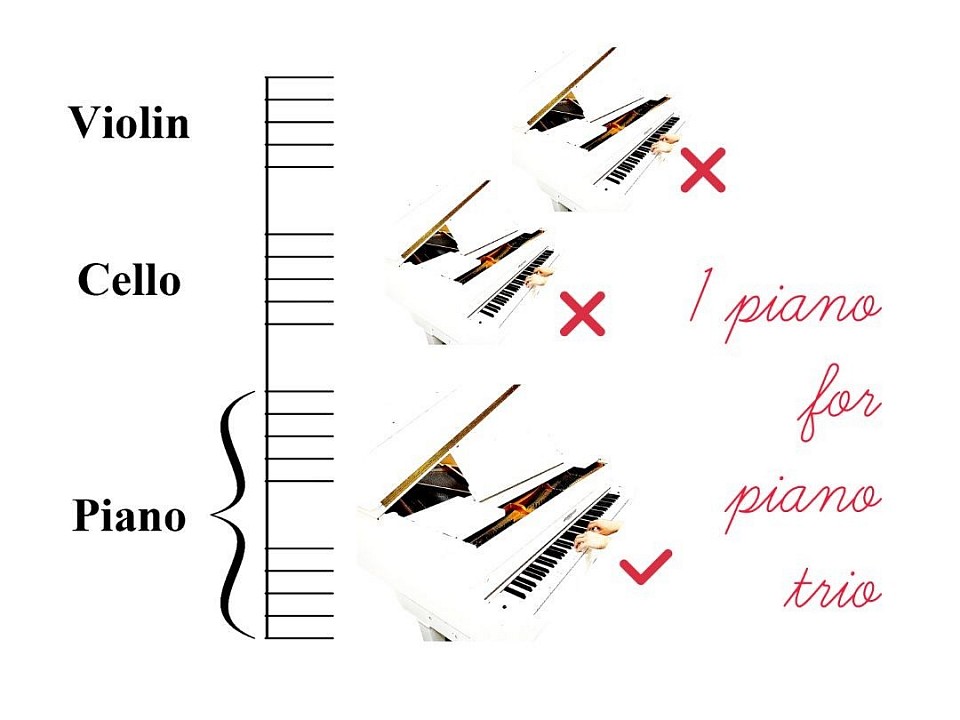
2.1.7. Piano trio uses one piano and two other instruments.
- Not 3 pianos or 6 hands.
Picture 2.1.7
— End of Chapter 2 Preview —
Start with what you need to learn first, where “natural” refers to the white keys on the piano.
Continue with the free sample or unlock the complete guide below.