
Chapter 5 Preview: Direction
5. When reading and playing the piano, make sure to go in the right direction.
- In this chapter, you will learn about scales, hand and finger transitions, staff arrangements, which section to follow (flow directions), as well as different repetitions and ornaments.

Picture 5.0
Scale Directions
5.1. Before going in the right direction,
- Always find middle C in the middle of both the piano and the staves.
- This is to make sure that you play in the right octave.
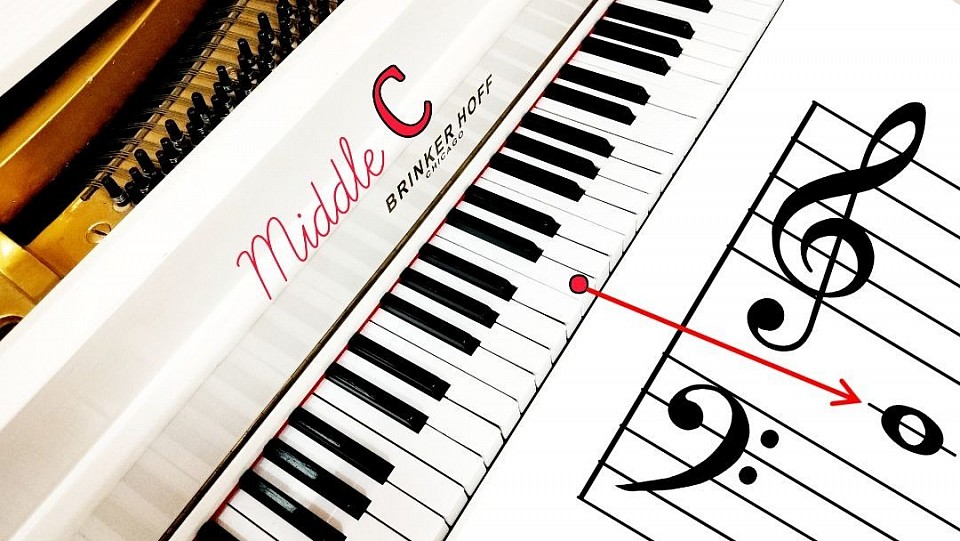
Picture 5.1
5.1.1. Middle C is the 4th C piano key from the left on an 88-key piano, abbreviated as C4.
- Lowest C = C1,
- Highest C = C8 (also the highest note).
- On smaller keyboards (6, 5, 4 octaves, or less than 3), all middle C positions are C3 unless modified.
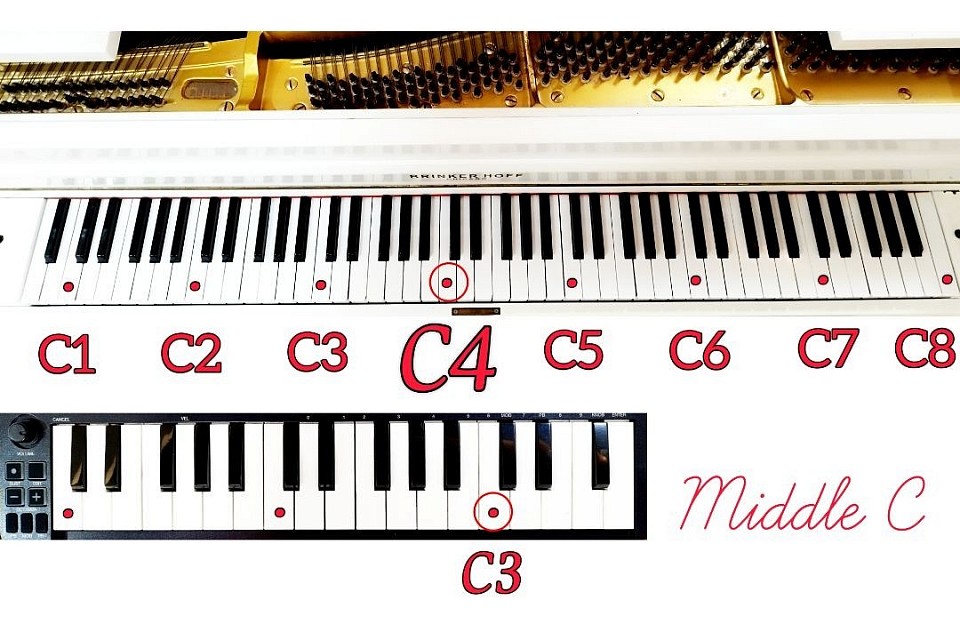
Picture 5.1.1
5.1.2. From middle C using the right hand on the white keys,
- go up one octave towards the G-clef,
- then return to middle C.
- Follow the suggested finger numbers.
5.1.3. From middle C using the left hand on the white keys,
- go down one octave towards the F-clef, then return to middle C.
5.1.4. Right hand going to the right
- Has the same finger transitions with the left hand going to the left.
- Both starts with the thumb along with the pointing finger and 3rd finger.
5.1.5. When fingers overlapped in the middle piano keys,
- Follow what is written in the piano score
- or assign which hand to use.
5.1.6. Other scales with black keys
- may also have the same transitions
- when both 1st and 4th notes fall on a white key.
— End of Chapter 5 Preview —
Learn the right direction in scales, finger transitions, staff arrangements, flow, repeats, and ornaments.
Continue with the free sample or unlock the complete guide below.